How does Mic Check help me know I’m muted?
Mic Check is a floating window designed to help you know when you’re muted. If you’re a long-time Mic Drop user, you may recognise it as the “Status window”, redesigned. 🪄
The new Mic Check feature shows your microphone levels, mute state, and default microphone in real-time, so you know exactly what’s happening with your mic.
You can use your keyboard shortcut or click anywhere in the Mic Check window to toggle your mic. Clicking Mic Check won’t steal focus from the app you’re using, so you can mute and unmute without missing a beat.
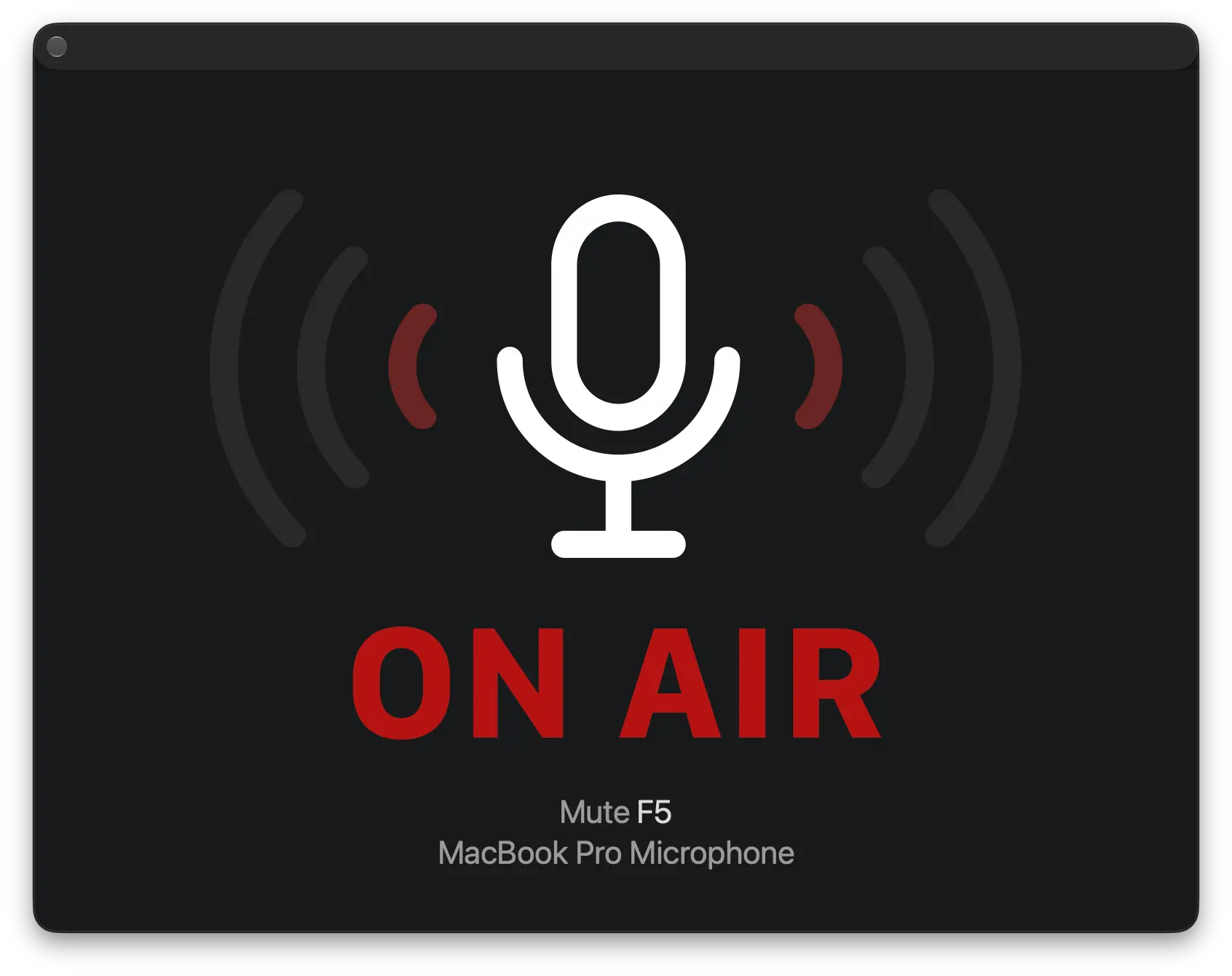
Using the VU meter
If you give Mic Drop input recording permissions, Mic Check will show you a VU meter, animating whenever it detects audio input. This is a great way to confirm that you’re really muted.
Of course, microphone audio access is totally optional, and if you don’t feel comfortable granting it, you just won’t see the real-time audio feedback. Mic Drop never records or listens to you. (Privacy.)
Resizing the window
Mic Check comes in six preset sizes: Tiny, Small, Normal, Large, Huge and Wide (which sits everything side by side). Right-click Mic Check and pick one under Window Size, or drag any edge of the window to make it any size you like.
Mic Check will snap to one of its preset sizes when you get close to one. To select a preset size, right-click (or Control-click) anywhere in the Mic Check window and choose one from the menu:
- Tiny shows just the microphone and its audio levels. It also hides the title bar, and only shows the close button when you hover over it, so you can keep it out of the way while still being able to see your mute status.
- Small adds your mute action, keyboard shortcut, and current microphone.
- Normal, Large, and Huge add the big “On Air”/“Off Air” sign.
- Wide arranges everything side by side, like a banner. This works great along the top or bottom of your screen.
Mic Check uses this side-by-side banner layout whenever you make the window short and wide. If the window is taller, it uses a stacked layout instead.
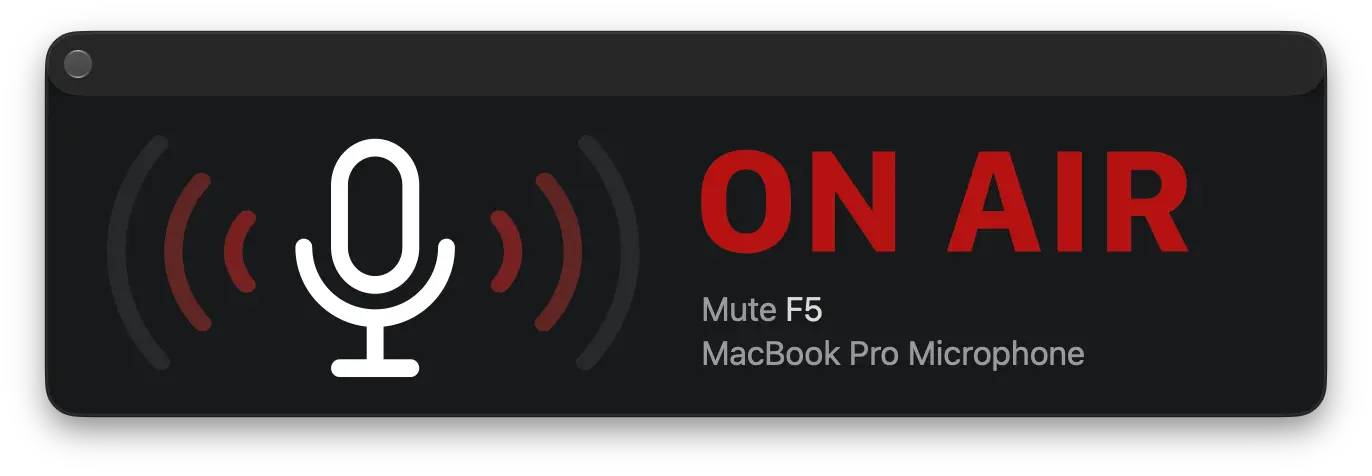
Mic Drop remembers the last size and position of Mic Check when you re-open it, so it's always where you left it.
Moving the window
Drag Mic Check by its titlebar to move it around. Clicking anywhere else in the window toggles your mic. At the Tiny size there’s no titlebar, so you can drag from anywhere instead (see below).
Mic Check floats above your other windows so you're always able to see it. It also follows you across Spaces and full-screen apps.
The Tiny size
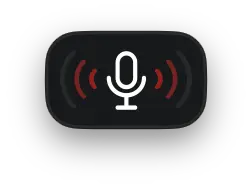
At its Tiny size, Mic Check hides its titlebar so it takes up as little space as possible. It works a lot like Picture in Picture:
- Click anywhere to toggle your mic.
- Drag from anywhere to move the window.
- Hover over the window to show the close button in the top-left corner. (If you use VoiceOver, the close button is always available.)

Dragging Mic Check to the menu bar
If you drag Mic Check up to the menu bar and move your pointer over the menu bar, macOS will expand Mic Check to fill your screen. This is a built-in macOS feature that works with every window, not just Mic Check. Move your pointer back down before you let go, and Mic Check will stay the same size.
If Mic Check has filled your screen by accident, drag it away from the menu bar to restore its previous size, or right-click it and choose a size from the menu.
You can turn this behaviour off for all windows in System Settings > Desktop & Dock > Windows by switching off “Drag windows to menu bar to fill screen”.
Opening and closing using a keyboard shortcut
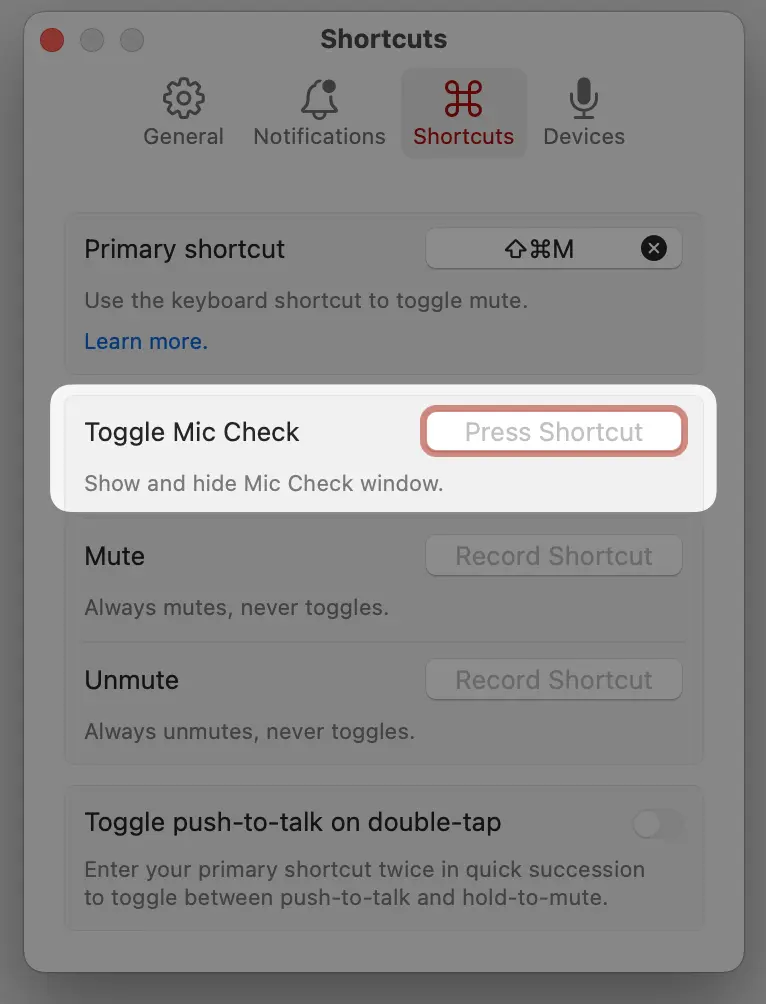
You can also set a keyboard shortcut to quickly open and close Mic Check. Enable the shortcut in Settings > Shortcuts:
Degraded audio quality with Bluetooth headphones
If you have the Mic Check window open, you have microphone audio enabled, and you’re using Bluetooth headphones: you may experience degraded audio quality. Essentially, everything will sound a bit “tinny”.
This is just how Bluetooth headphones work—they have a “listening mode” (better audio quality) and a “call mode” (sounds more like a 1990s cellphone).
Mic Check monitors your microphone’s audio level and displays it in real-time (eg. a “VU Meter”). This means your Bluetooth headphones will go into “call mode” whenever Mic Check is open.
You can close Mic Check and your audio should be back to normal.
In rare cases macOS can fail to update your Bluetooth headphones and keep them in “call mode”, even after you close Mic Check or end a meeting. In that case, you can quit Mic Drop and open it again to restore “listening mode”.
If that happens to you a lot, please send us an email and let us know which Bluetooth headphones you’re using so we can try to improve things for you!
Still have questions? We’re here to help! Contact us